
Astronomy vs Astrology and the Rejection of Astrology as a Science
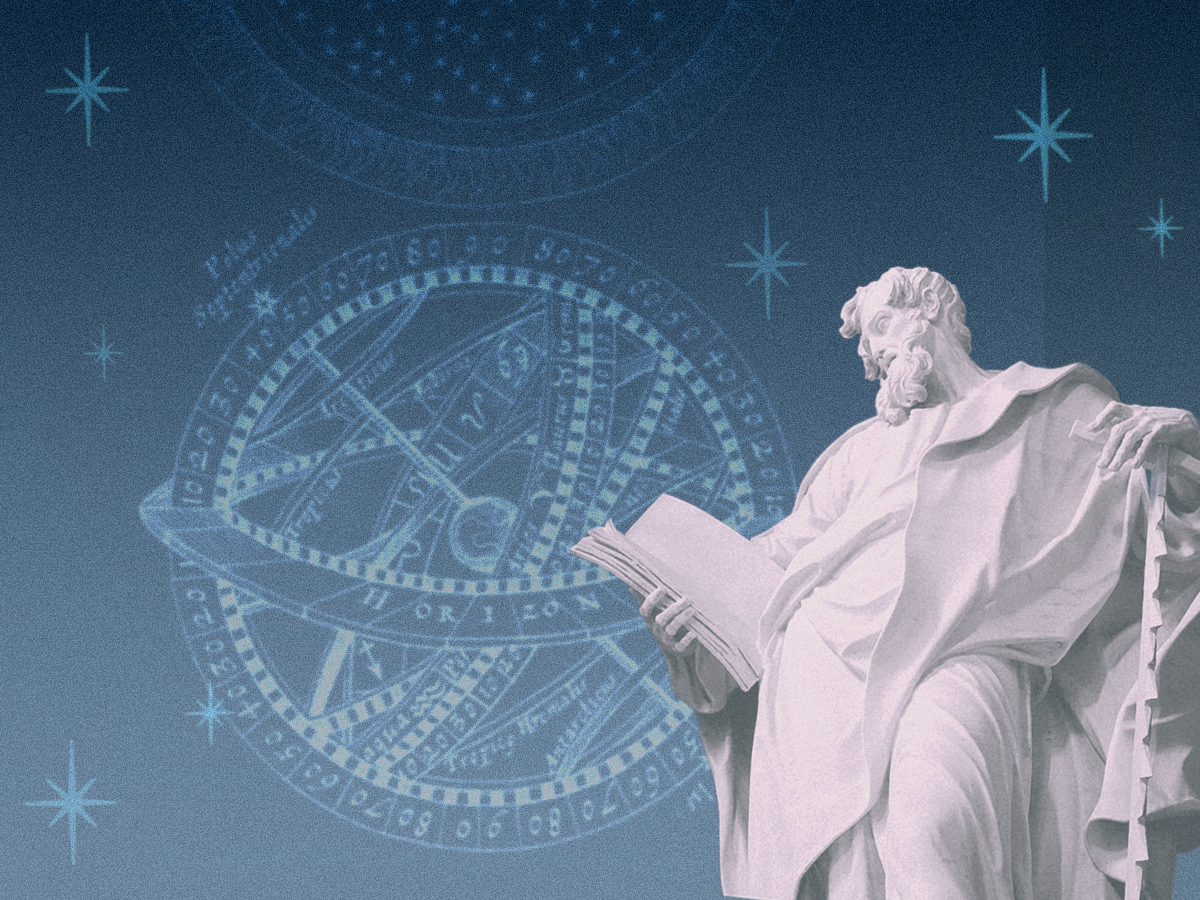
For most of history, astrology and astronomy were deeply intertwined and were once considered one in the same. Observing the heavens was both a way to understand celestial patterns and to interpret their influence on life on Earth. Over time, however, these fields eventually parted ways. This article provides a short history of how this separation led to the rejection of astrology in science.
Astronomy vs Astrology
Astronomy is the science of observation, recording, and calculation of the motion of the celestial bodies seen in the night sky, which has been practiced throughout the globe for thousands of years. In ancient times, astrology was considered the practical application of astronomy and was used to predict events as a method of divination by way of interpreting the messages of the gods (represented by the planets).
The separation of astronomy and astrology
The separation of astrology and astronomy first occurred in the Islamic World during the 11th century, after religious leaders condemned predictive astrology as incompatible with Islam and free will. The split of the subject, however, wasn’t sudden and was adopted across Islamic institutions over the course of two centuries. Islamic scholars then passed on this body of knowledge to Western Europe as two separate subjects, and they were taught and practiced alongside each other throughout the Middle Ages.
There had always been scholars and philosophers who had studied and rejected astrology or took little interest in it. However, what is less well known is that Renaissance astronomers such as Galileo Galilei and Johannes Kepler, and those who came before them, were also astrologers. They were just as interested in interpreting the movements of the planets as they were in studying them. While Isaac Newton was not a practicing astrologer, he defended it against critics, reportedly saying that he had studied the subject while its critics had not.
Advancements in astronomy during the Renaissance period & religious condemnation of astrology
As instruments and scientific methods improved during the Renaissance, astrology became less relevant to the questions scientists were asking. Scientists focused their efforts on the advancement of measurable and predictable phenomena rather than symbolic meanings, since this is where the most exciting discoveries were being made. Kepler’s mathematical laws describing planetary motion transformed astronomy’s previously complex model into a more mathematically elegant, law-based one, while Galileo’s telescopic observations emphasized the material reality of celestial objects, showing them to have mass and irregular surfaces. Newton, though interested in astrology, focused his work on universal laws, which further separated astronomy from its astrological past.
It wasn’t until the 17th and 18th centuries, astrology began to lose its appeal in scholarly circles. Universities in Europe gradually removed it from their curricula, royal courts and political patrons stopped relying on astrologers, and physicians increasingly questioned the influence of the heavens on medicine. Religious authorities often viewed astrology as magic or false knowledge, not compatible with Christianity, while astronomy was accepted as a legitimate study.
Astrology is no longer considered a science
Humanist scholars revisiting classical texts challenged astrology’s philosophical foundations, and the rise of separate specialized disciplines like mathematics, astronomy, and physics (which were once combined), during the Scientific Revolution drew practitioners away from astrology. In some cases, authorities actively discouraged astrological practice, while in others it simply faded from professional and scholarly life. By the end of the Enlightenment period (18th century), the distinction between science and non-science was made more explicit, and astrology, alongside alchemy and magic, was increasingly portrayed as superstition and a relic of an unenlightened past.
Encyclopaedia Briannica’s first edition entry (Published 1768):
ASTROLOGY, a conjectural science, which teaches to judge of the effects and influences of the stars, and to foretell future events by the situation and different aspects of the heavenly bodies. This science has long ago become a just subject of contempt and ridicule.
Despite its decline in academic circles and medical contexts, astrology remained culturally significant, shaping literature, art, and everyday practices. Efforts to actively debunk astrology didn’t emerge until the 19th century, when science became the dominant cultural framework for understanding the natural world.
The history of astrology and astronomy shows that scientific change is often gradual, cultural, and communal, rather than sudden and confrontational. Ultimately, scientific tools, methods, interests, and belief systems shifted over time. As new questions and priorities emerged, astrology simply ceded the space to astronomy, leaving it behind as a cultural artifact rather than a scientific discipline.
For further reading check out A Brief History of Astrology
References:
Reassessing the Marginalization of Astrology in the Early Modern World (2023)
The Cambridge History of Science: Volume 3, Early Modern Science. Chapter 23 – Astrology (2016)
Reading the Future and Freeing the Will: Astrology of the Arabic World and Albertus Magnus (2006)