The Origin of Astrology Glyphs
In Astrology, glyphs (or symbols) are used to represent the planets, signs of the Zodiac, asteroids, and other important astrological points. Some symbols date back to ancient times, but most were introduced during the medieval Byzantine period. Used as a visual reference, glyphs allow astrologers to draw and interpret astrological charts more efficiently. They were also used by astronomers, alchemists, and those who practiced magic. Over time, these glyphs evolved into a standardized set that is used today.
History of Zodiac Glyphs
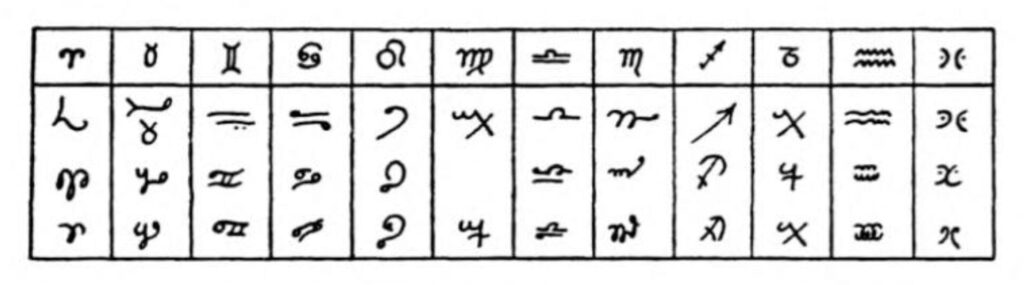
Although the ancient Babylonians developed the signs of the zodiac along with their symbolisms (Taurus the bull, Leo the lion etc.), it wasn’t until the Byzantine period that astrologers began to use a set of glyphs to represent the signs of the zodiac. It is possible that some symbols were used by astrologers and astronomers before this time, but no surviving records have been found to demonstrate this.
The zodiac glyphs signify the animal, object, or people associated with each of the zodiac constellations. Below are examples from Byzantine texts. All except Taurus and Capricorn somewhat resemble the modern zodiac symbols we use today.
Evolution of the Planetary Glyphs
The planetary glyphs used in astrology can be traced back to the Hellenistic era, where ancient astrologers would use symbols for both the Sun and Moon. Later on, the remaining classical planets acquired their own glyphs, which often reflected their symbolic associations. Early astronomers and astrologers developed these visual representations for the planets to simplify and speed up notation.
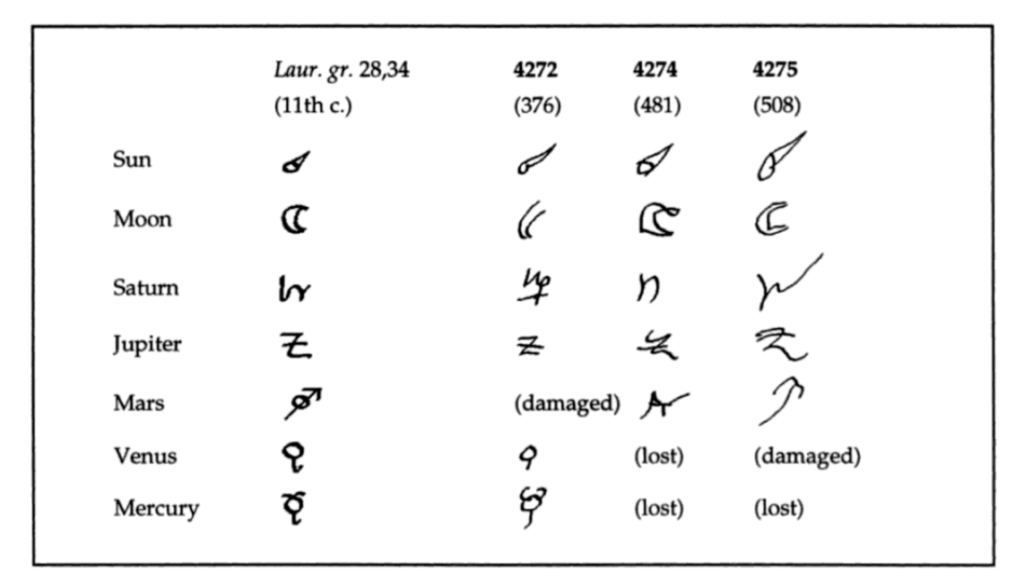
3rd – 1st century BC – Hellenistic astrologers sometimes used glyphs for the Sun (comet-like shape) and the Moon (crescent). The other planets, Mercury through Saturn, were written in full or abbreviated in horoscopes, they did not yet have their own glyphs.
5th – 12th century – A full set of planetary glyphs emerged during the Byzantine period. This was also the first time astrological diagrams were recorded in manuscripts (both circular and square forms), although fully written planetary names were still used. In early medieval Europe, these symbols were standardized and likely remained unchanged for centuries. The Greek letter Z (zeta) was used for Jupiter (the planet is associated with the Greek god Zeus), and Saturn took its shape from an early rendition of a Capricorn glyph (Saturn is the ruling planet of Capricorn).
14th -17th century – During the Renaissance, the planetary symbols were modified and simplified for practical use in horoscopes and astronomical tables. The symbol for the Sun changed from a comet-like shape to a circle with a dot in the center. By this time, the planetary glyphs had largely taken the modern form.
18th – 20th century- As new planets and asteroids were discovered, additional glyphs were created. Symbols for Uranus, Neptune, and asteroids Ceres, Pallas, Juno, and Vesta were introduced soon after each of their discoveries in the late 1700’s and 1800’s. Pluto’s glyph and the Trans-Neptunian Hypothetical Planets’ glyphs were introduced in the 1920’s and 30’s.
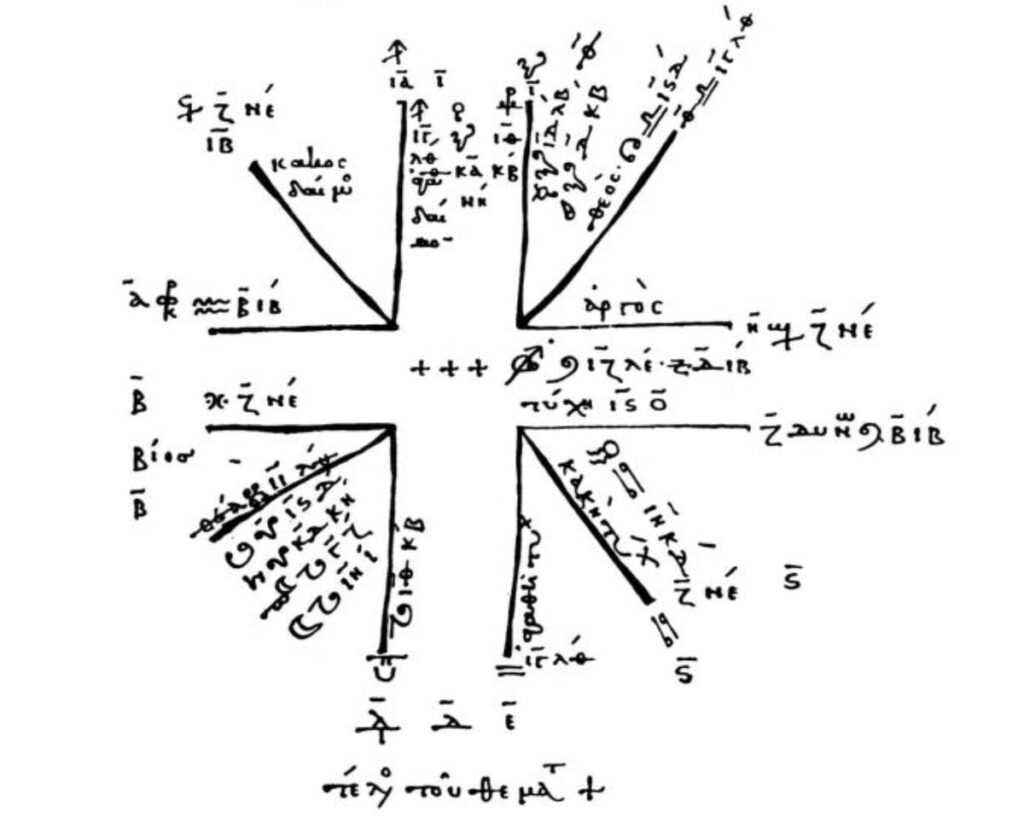
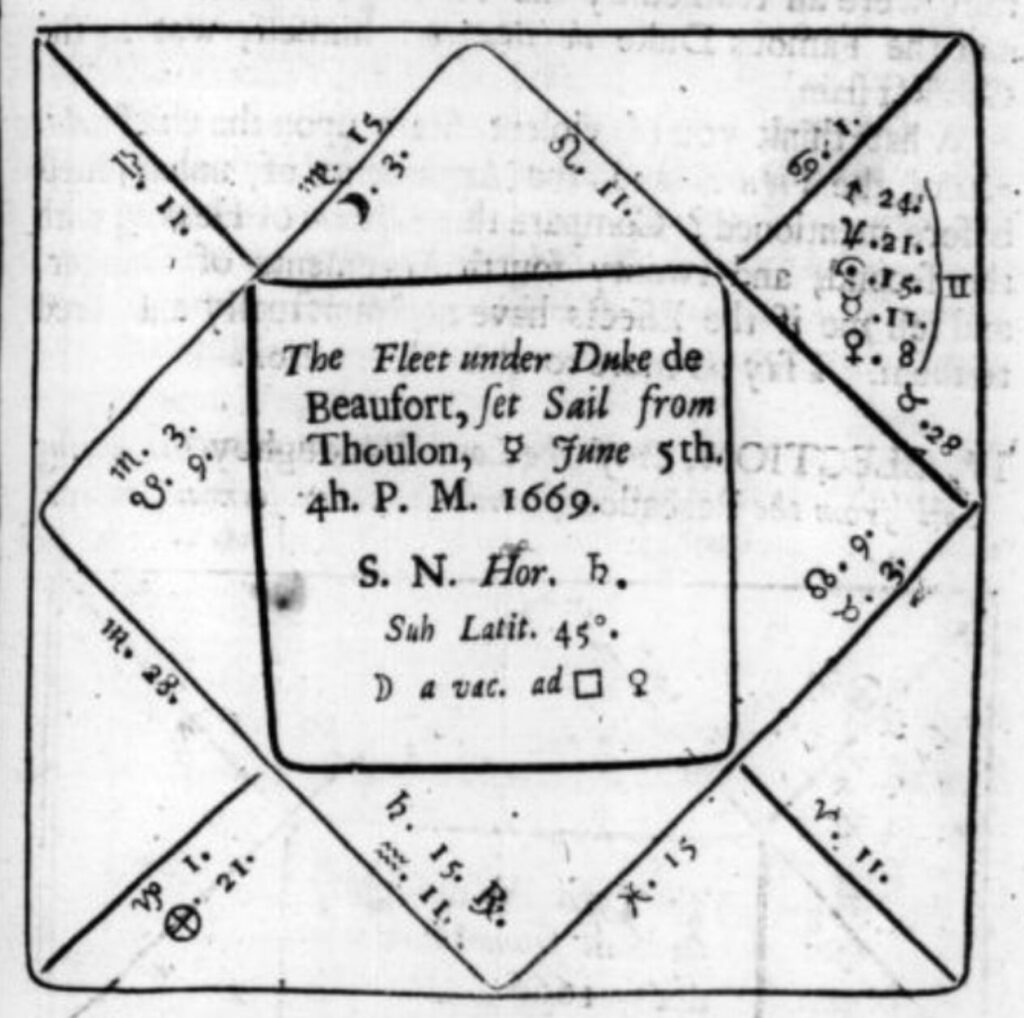
Other uses of astrology glyphs
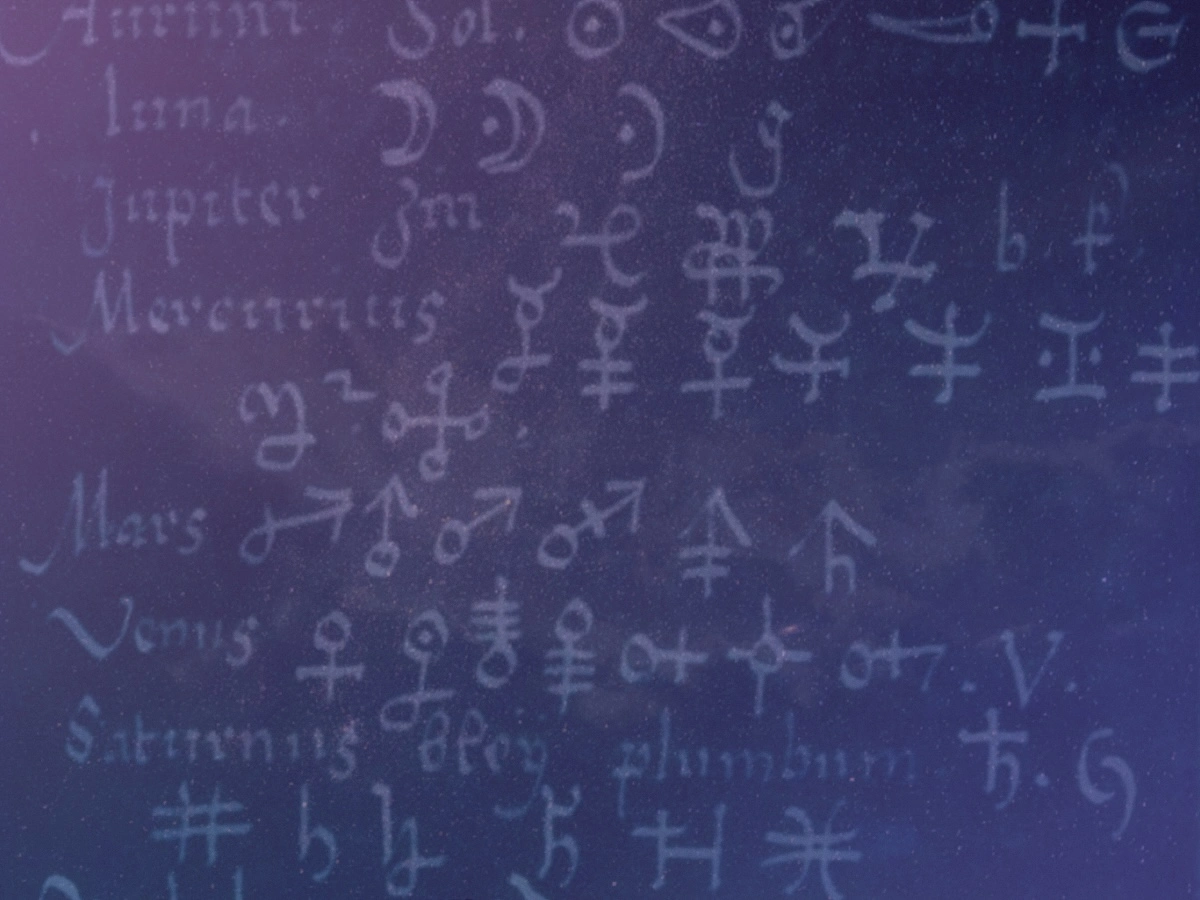
Astrology glyphs were not only used in astrological charts but also played a part in alchemy and magical practices. In alchemy, this was seen in the work of alchemist Nicolas Flamel, who used astrological symbols in his writing. According to his theory, each of the seven classical planets is linked to a metal. For example, the Sun was commonly linked to gold and the idea of unity or perfection, while the Moon was associated with silver and the principle of change.
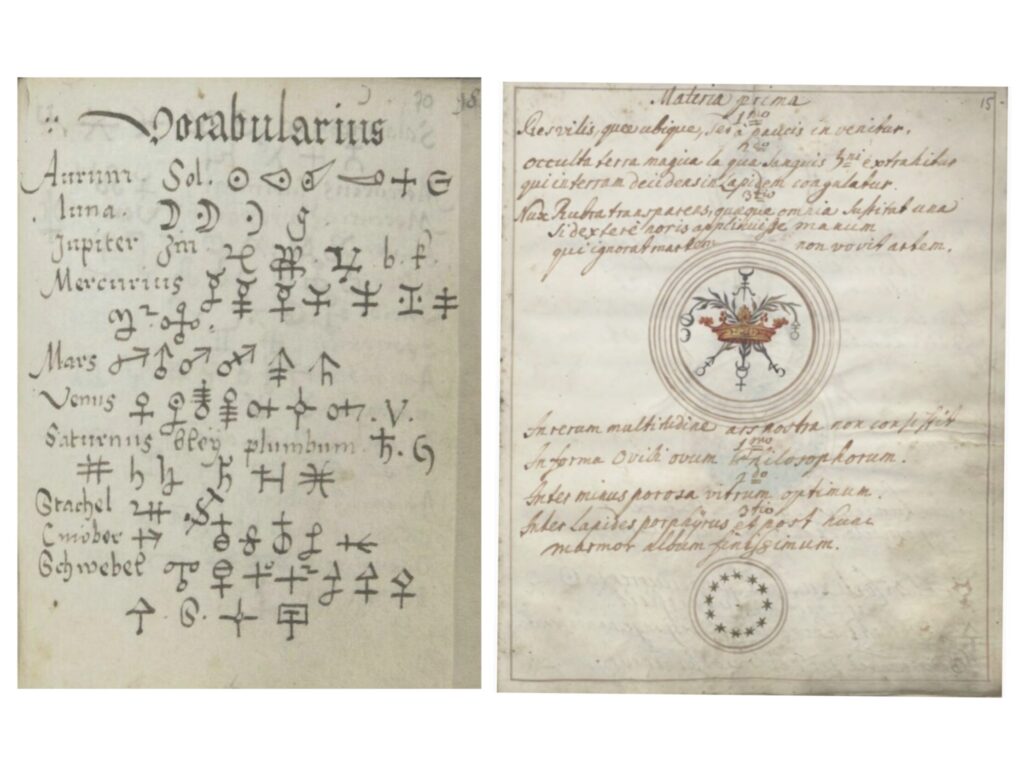
In magical practices, glyphs appeared in talismans (an object made to hold specific powers), ritual diagrams, and occult texts, where practitioners believed that the symbols could channel planetary forces, enhance spiritual effects, or protect and empower different subjects.
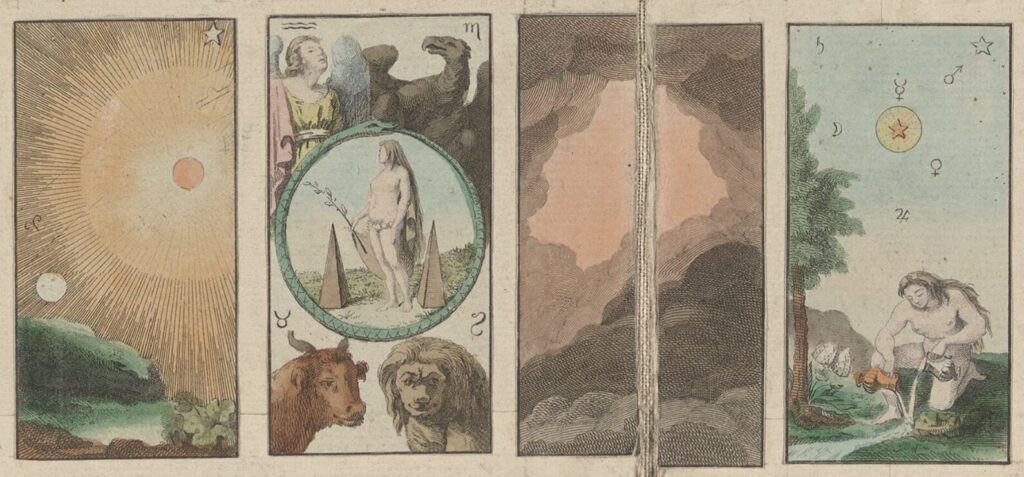
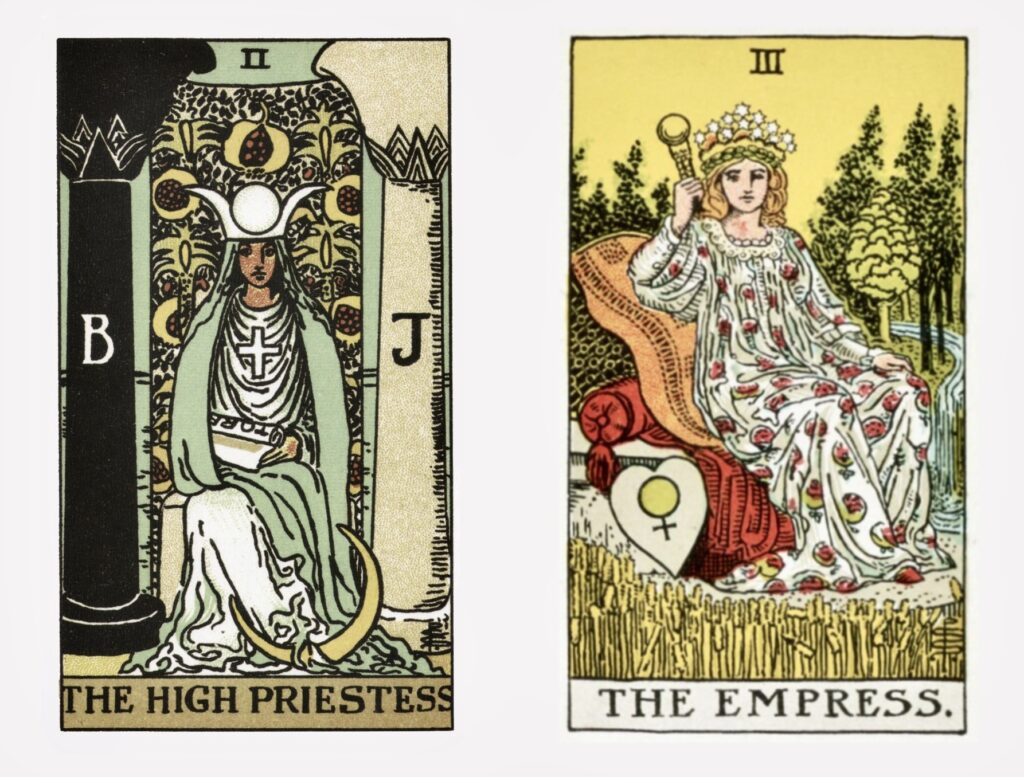
Astrology glyphs can occasionally be found on the artwork of Tarot cards. Astrological symbolism was first introduced to Tarot by Jean-Baptiste Alliette in the 18th century, with cards directly representing the planets and each of the zodiac signs for divination purposes.